Have Additional Questions? Contact Us: info(at)aviadiag.com

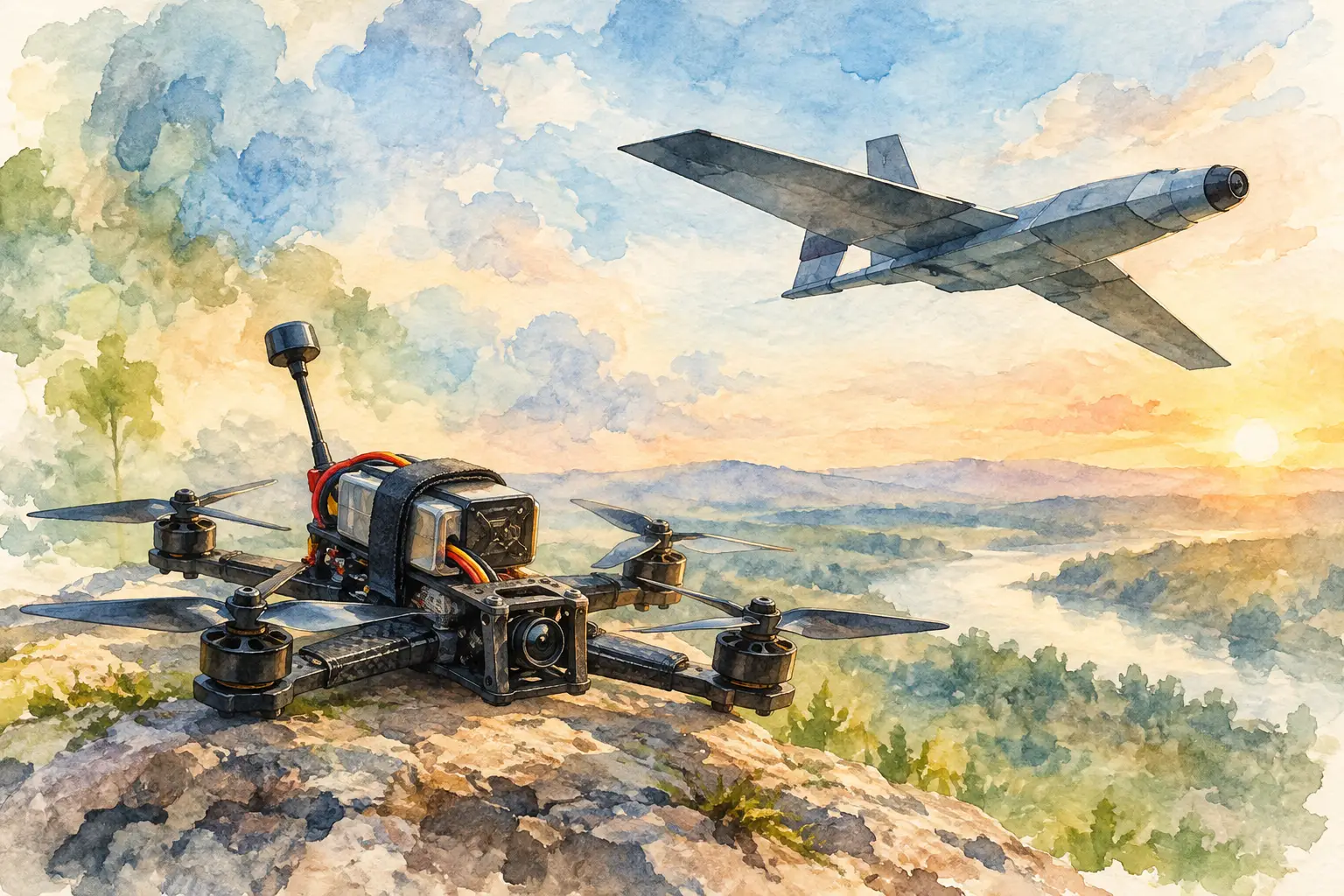
A J02 interceptor is not a component to select by appearance or headline capability alone. It belongs in a purpose-built aircraft where the airframe, control link, FPV video path, power system and recovery plan have been chosen around a defined, authorised mission. For experienced FPV builders, that is the difference between assembling capable hardware and creating an aircraft that performs predictably when it matters.
The right build starts with the operational requirement, not the parts list. Establish the permitted environment, the aircraft’s role, expected flight duration, payload allowance and required level of video-link confidence. From there, the J02 interceptor can be evaluated as part of a complete system rather than treated as an isolated upgrade.
What to assess before choosing a J02 interceptor
Specialised interceptor hardware is inherently application-led. A suitable configuration for a controlled test range may be a poor fit for a compact FPV platform intended for general technical development. Before committing to a layout, identify the physical, electrical and communications constraints that will govern the build.
Start with available space and mass distribution. The aircraft needs enough structural capacity for the selected hardware without forcing the battery, flight controller and FPV equipment into compromised positions. Centre-of-gravity discipline remains essential. A clean bench layout can still become an unstable aircraft if component placement produces an excessive forward, rearward or lateral bias.
Power planning deserves the same attention. Confirm voltage compatibility, peak current demand, connector standards and the margin available from the battery and power-distribution system. A system may appear stable at idle but become unreliable when motors, video transmission and attached hardware draw current together. Use appropriate regulation, sensible cable routing and a power architecture that keeps noise-sensitive FPV equipment protected from interference.
The final question is integration. A J02 interceptor should fit your chosen flight-control environment, receiver setup and ground-station workflow without relying on improvised conversions or uncertain assumptions. Where configuration details are outside standard stock information, establish requirements with a specialist supplier before finalising the build.
Build the FPV link around reliability
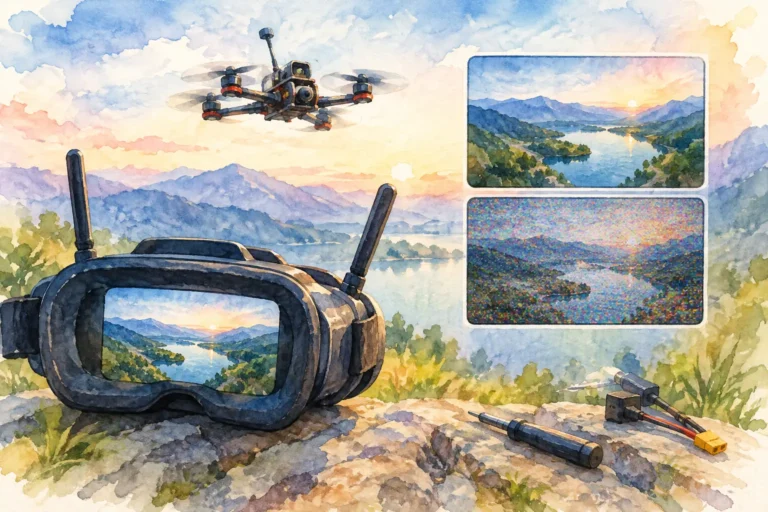
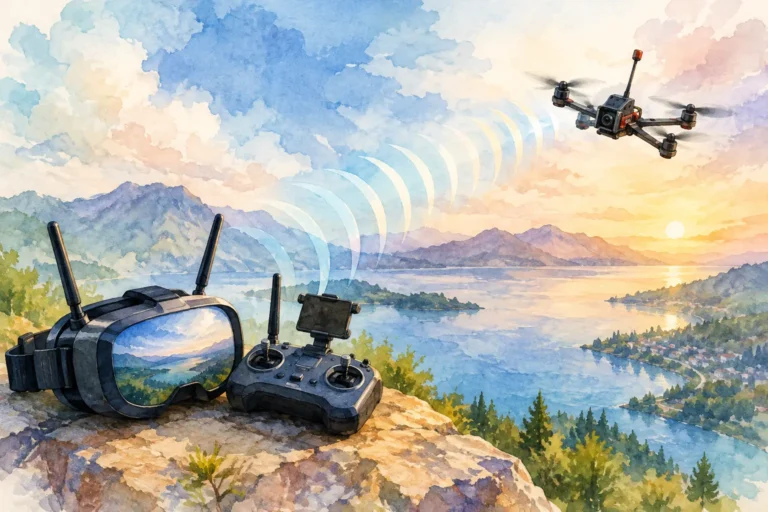
For an FPV operator, video-link quality is not a cosmetic feature. It shapes how confidently the aircraft can be assessed, configured and flown within its permitted operating conditions. The best interceptor airframe cannot compensate for a video system affected by poor power filtering, unsuitable antenna placement or incompatible transmitter and receiver choices.
Plan the video chain as a complete path: camera, video transmitter, antenna, receiving equipment and display. Each element has to suit the intended environment and the practical limits of the aircraft. Prioritise stable image delivery and clean installation over adding unnecessary complexity. A well-matched system with sensible separation between radio-frequency components will often deliver more dependable results than a collection of nominally higher-powered parts installed without a plan.
Antenna placement is particularly important on compact builds. Keep antennas clear of carbon structures, high-current wiring and components likely to obstruct their effective orientation. Avoid placing the video transmitter in a position where it receives excessive heat from other equipment or limited airflow. Heat management is not only about preserving the transmitter. It protects consistency across the full video chain during repeated flights.
Optical-fibre connectivity hardware may be relevant where a project requires a specialised physical link architecture. It is not a universal substitute for correctly designed RF equipment, and it introduces its own handling, routing and integration considerations. Select it only when the operational design calls for it, then protect the fibre path from tight bends, abrasion and avoidable strain.
Match control, video and power systems early
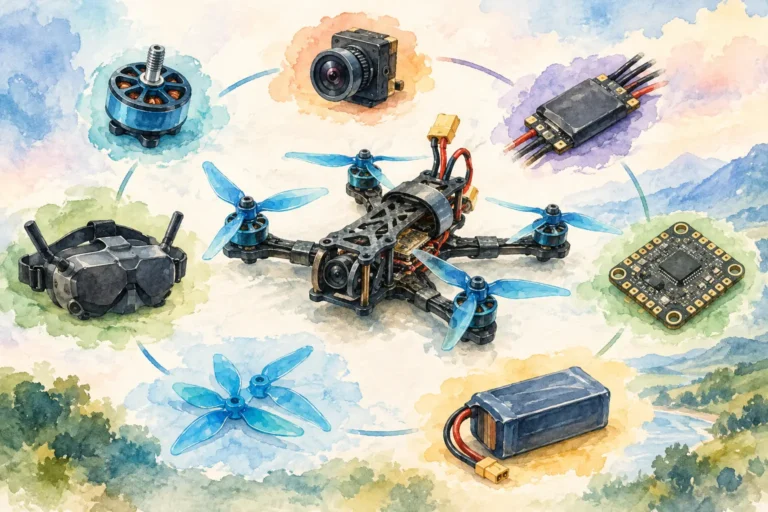
The most expensive mistakes happen when critical systems are treated as separate purchases. The control receiver, FPV transmitter, battery and J02 interceptor arrangement should be considered together during the design stage. This allows you to identify voltage conflicts, mounting restrictions and radio-frequency interference risks before the aircraft is closed up.
Use a documented wiring plan and label connections while the build remains accessible. Record connector types, regulated outputs, channel assignments and component firmware states. This is practical discipline, not paperwork for its own sake. When a fault appears after transport, maintenance or a hard landing, a clear record reduces diagnosis time and prevents repeated errors.
A J02 interceptor build needs disciplined integration
Purpose-built FPV aircraft reward careful assembly. Route cables so they cannot reach moving parts or propeller arcs, and secure them without crushing insulation or placing tension on connectors. Keep signal wiring away from high-current paths where possible. If crossings are unavoidable, make them deliberate and inspectable rather than buried beneath tape or heat-shrink.
Mechanical fastening also matters. Check that mounts are appropriate for vibration, that fasteners are secured correctly and that access remains available for inspection. Over-tightening can damage frames, plastics and electronics, while under-tightening can create vibration that affects flight performance and image quality. The target is a serviceable installation that remains stable over repeated handling and transport.
Do not assume default settings are appropriate for a custom aircraft. Confirm configuration parameters against the actual installed equipment, then carry out staged ground checks before any flight activity. Verify that the control system responds as expected, the video feed remains stable, regulated power outputs are correct and heat does not build unusually during powered testing.
Testing should progress from low-risk inspection to controlled validation. Start with the props removed where relevant, then inspect for loose wiring, hot components, unexpected current draw and video noise. Only move forward when each stage is behaving consistently. This approach may feel slower than a rapid field assembly, but it is faster than replacing damaged components after an avoidable failure.
Choose components according to the mission, not the catalogue
A high-performance build is not automatically the build with the largest battery, highest-output transmitter or most elaborate hardware arrangement. Every choice introduces a trade-off. More capacity can increase endurance but also aircraft mass. More transmission capability can raise heat and power demands. Additional hardware can expand functionality while reducing available room for clean cable management and effective cooling.
For compact builds, weight and layout may dominate the decision. For larger professional platforms, serviceability, thermal control and power reserve may matter more. In either case, use components that support the flight vision instead of forcing the aircraft to accommodate mismatched equipment.
This is where a specialised parts supplier adds practical value. Aviadiag supports builders sourcing FPV transmitters, receivers, optical-fibre discs and interceptor hardware for defined system requirements. When standard inventory does not fully match the intended configuration, direct sales contact can help clarify component-level requirements before a purchase locks the build into an unsuitable path.
Keep operation lawful, controlled and accountable
Interceptor-capable hardware carries a higher responsibility than ordinary recreational FPV equipment. Operators must work within applicable aviation, radio, privacy, safety and local site rules. Use should be limited to authorised environments, legitimate purposes and appropriately controlled conditions. Equipment selection does not replace permits, training, organisational procedures or risk assessment.
Build records should include component identification, maintenance history, battery condition, configuration changes and test outcomes. This gives professional operators a traceable basis for maintenance decisions and gives advanced hobbyists a clearer view of how the aircraft has evolved. It also makes it easier to identify whether a performance issue began after a firmware update, wiring change or component replacement.
Before each session, inspect the airframe, fasteners, propellers, connectors, antenna mounts and battery condition. Confirm that the video feed is clear, receiver behaviour is normal and failsafe settings have been reviewed for the current configuration. These checks are brief, but they protect the investment in specialist hardware and support a more controlled operating standard.
The strongest J02 interceptor setup is one with no weak link in the surrounding build. Define the requirement, match the FPV and power systems carefully, validate each stage and keep the aircraft within authorised use. That is how specialised hardware becomes a dependable part of a flight system built to meet a real objective.